
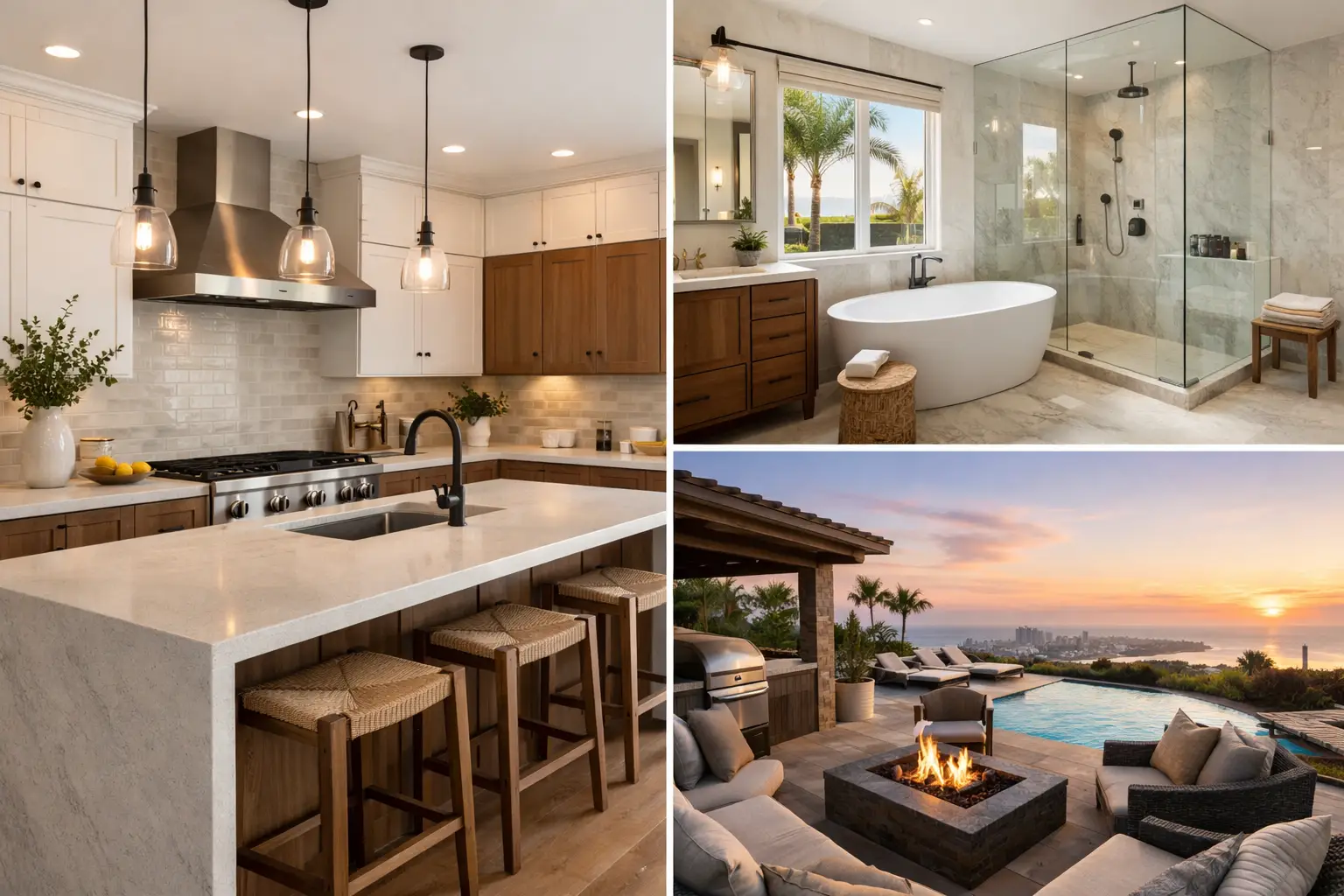
A whole-house renovation rarely starts with finishes. It starts with a number. Before you choose white oak floors, expand a kitchen, or rework a dated primary suite, you need a full home remodel cost guide that reflects how projects actually come together in San Diego – design, permits, labor, materials, and the surprises hidden behind walls.
For homeowners planning a meaningful upgrade, the most useful question is not, “What does remodeling cost per square foot?” It’s, “What level of transformation are we really trying to achieve?” A cosmetic refresh, a layout reconfiguration, and a full design-forward rebuild of the interior may all fall under the label of a full remodel, but they carry very different budgets.
What a full home remodel cost guide should include
A reliable budget framework has to go beyond cabinets and tile. Full home remodeling often combines multiple scopes into one project: kitchen, bathrooms, flooring, lighting, paint, doors, trim, plumbing updates, electrical work, HVAC improvements, and sometimes structural changes. In higher-end San Diego homes, it may also include larger openings for indoor-outdoor living, custom millwork, upgraded windows and sliders, and premium appliances.
That is why broad online estimates can feel misleading. A home with an unchanged floor plan and mid-range materials may land in one budget range, while a home that requires engineering, permit-heavy work, and custom finishes can move much higher. Both are technically full remodels. They are not remotely the same job.
Typical full home remodel cost ranges
In San Diego, many full home remodels begin around $150 to $300 per square foot for substantial interior renovations, with high-end projects often exceeding that range once custom details, structural work, or luxury materials are involved. For a 2,000-square-foot home, that can mean roughly $300,000 to $600,000 and up, depending on scope.
Those numbers are not meant to shock you. They are meant to create clarity. If your project includes a kitchen overhaul, multiple bathroom remodels, new flooring throughout, electrical and plumbing updates, and a more refined finish level, the total adds up quickly because each trade touches the home.
A lighter whole-home update may cost less if you keep the layout, avoid major systems work, and choose quality but not fully custom finishes. On the other hand, a luxury remodel in neighborhoods where design expectations are high can easily rise above standard averages. Finish level matters, but so does complexity.
A simple way to think about pricing tiers
An entry-to-mid full remodel usually focuses on replacing worn finishes, updating kitchens and baths with semi-custom selections, and improving function without moving too many walls. A higher-tier remodel often includes custom cabinetry, premium surfaces, more ambitious lighting plans, larger-format tile, better windows and doors, and a stronger architectural point of view.
The most expensive projects are not always the biggest. They are often the ones with the most coordination, customization, and hidden infrastructure work.
The biggest factors that change remodel costs
Scope of work
This is the first and biggest driver. If you are remodeling every room but leaving the floor plan intact, your cost profile will be very different from a project that opens up the kitchen, relocates plumbing, or combines bedrooms. Structural changes typically require engineering, permits, inspections, and more labor.
Age and condition of the home
Older homes can carry extra cost because they reveal more once demolition begins. Outdated wiring, aging plumbing, uneven framing, moisture damage, and code-related corrections are common budget movers. In coastal areas, salt air and wear over time can also affect windows, exterior openings, and mechanical systems.
Material selections
There is a large gap between builder-grade, premium, and luxury materials. Cabinetry is a good example. Stock cabinets can keep budgets controlled, while custom cabinetry built to fit the home and design can dramatically raise the investment. The same applies to appliances, stone, plumbing fixtures, flooring, and doors.
Permits and design complexity
If your remodel requires city approvals, plan revisions, or specialty consultants, budget more time and money for pre-construction. Permit costs themselves are only one part of the equation. The real impact is the coordination needed to move the project forward correctly.
Labor and project management
A full remodel involves many moving parts. Demolition, framing, rough plumbing, rough electrical, insulation, drywall, cabinetry, tile, flooring, paint, finish carpentry, and punch work all need to happen in the right sequence. Experienced project management is not an extra. It is part of what keeps timelines realistic and prevents expensive missteps.
Where the money usually goes
Kitchens and bathrooms consume a large share of a whole-home budget because they combine cabinetry, plumbing, electrical, tile, stone, and fixtures in tight, detail-heavy spaces. If your remodel includes both, expect them to set the tone for the overall investment.
Flooring throughout the home is another major line item, especially if subfloors need repair or leveling. Lighting upgrades also add more than many homeowners expect, particularly when the plan includes recessed lighting, feature fixtures, dimming systems, or panel upgrades.
Doors, trim, paint, and windows may seem secondary at first, but they strongly influence how finished the home feels. In design-conscious remodels, these are not afterthoughts. They are part of the overall result.
How to budget realistically without overbuilding
A good full home remodel cost guide should help you align spending with priorities, not just chase the lowest number. Start by separating must-haves from nice-to-haves. If better flow, more natural light, and a durable kitchen matter most, put more of the budget there before allocating money to lower-impact upgrades.
It also helps to be honest about how long you plan to stay in the home. If this is your long-term residence, investing in layout improvements, quality materials, and durable systems often makes sense. If you may move in a few years, you may want a more selective approach that improves livability and value without pushing every finish to the top tier.
Contingency matters too. For full remodels, setting aside 10% to 20% for unknowns is smart, especially in older homes. That is not pessimism. It is good planning.
How to compare estimates the right way
Not all bids are built the same. One contractor may include design support, permit coordination, and a detailed scope, while another gives a lower number that leaves major categories unclear. A cheap estimate is not automatically a better estimate if allowances are unrealistically low or key work is excluded.
When comparing proposals, look for clarity. Are materials and allowances identified? Is demolition included? What about haul-away, permit handling, inspections, temporary protection, or finish installation details? The more complete the scope, the more useful the number becomes.
This is where homeowners often save money in the long run by choosing a contractor with an organized process. Clear communication at the front end usually means fewer expensive surprises later.
Full home remodel cost guide for planning timeline and cash flow
Budget and timeline are tied together. A rushed project can create avoidable costs, while a well-planned pre-construction phase can tighten the build and reduce change orders. For larger remodels, homeowners should expect time for consultation, design development, material selection, estimating, permits, and scheduling before construction even begins.
During construction, payment schedules are usually tied to milestones rather than one flat number upfront. That structure gives homeowners visibility into how the project progresses and where money is being applied. It also reinforces accountability on both sides.
For San Diego homeowners, lead times can influence final cost as well. Specialty windows, custom cabinetry, imported tile, and high-end appliances may affect scheduling. Early selections help protect both budget and momentum.
When a higher remodel budget is worth it
There are times when spending more is the practical choice. If a home has a poor layout, aging systems, and finishes that do not match the property’s value, a more comprehensive remodel can produce a result that feels cohesive rather than pieced together. That matters in homes where architecture, location, and lifestyle deserve a better fit.
For many local homeowners, remodeling is also about living better, not just resale. Better circulation, stronger connection to the backyard, improved storage, and calmer, more refined interiors can change how the home feels every day. Forge & Stone approaches those projects with the understanding that design quality and construction discipline need to work together.
The smartest place to begin is with an honest conversation about scope, priorities, and finish level. If the numbers are clear from the start, the decisions that follow tend to be better ones – and the finished home reflects that care.