
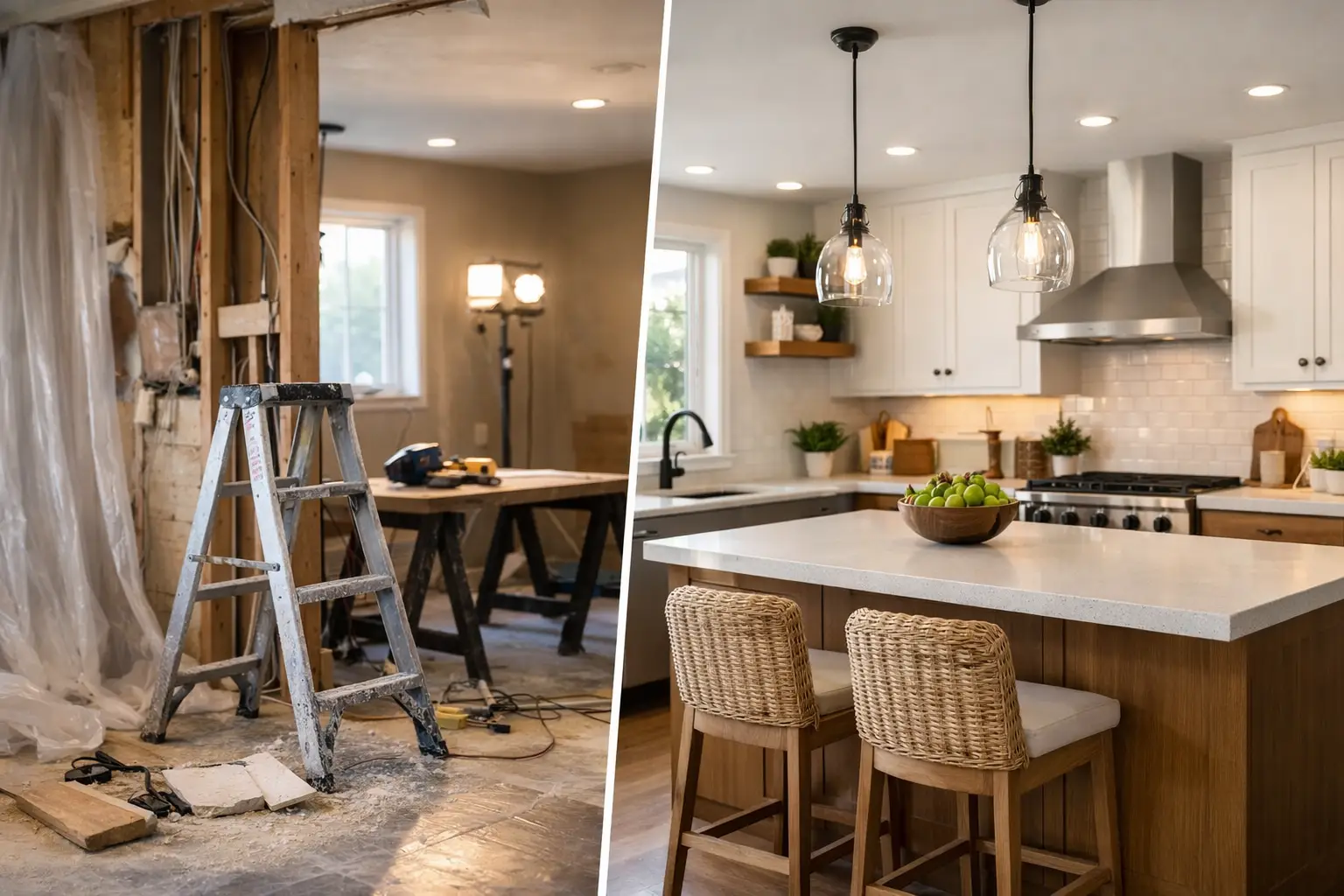
A remodel rarely feels long on paper. Then the permits take another few weeks, the tile you loved goes on backorder, and the custom windows need a longer lead time than expected. If you are asking how long does a home remodel take, the honest answer is this: longer than most homeowners hope, but much faster when the process is planned well from the start.
For high-end remodeling, timeline is not just about construction days. It includes design decisions, drawings, permits, material procurement, inspections, and the natural complexity that comes with changing a lived-in home. A realistic schedule protects quality, reduces stress, and helps you make smart decisions before work begins.
How long does a home remodel take in real life?
Most remodeling projects fall into a range rather than a fixed deadline. A bathroom remodel may take 6 to 10 weeks of construction once work starts. A kitchen often runs 8 to 12 weeks. A full home remodel can take 4 to 9 months, and sometimes longer if structural changes, additions, or major permit review are involved.
That said, construction is only part of the picture. Before demo begins, many projects spend several weeks or a few months in planning. For a design-conscious remodel, homeowners usually need time for site visits, scope development, selections, pricing, drawings, and city approvals. If you count the full process from first consultation to final walkthrough, even a relatively straightforward renovation can take longer than expected.
This is why the best contractors do not promise the shortest timeline. They give you the clearest one.
The phases that shape your remodeling timeline
Planning and design
This stage is where the project gets organized. You define goals, confirm budget range, review layout options, and make early design choices. If the remodel is cosmetic, this can move fairly quickly. If it involves reworking kitchens, baths, flooring, lighting, or indoor-outdoor flow, planning takes more time because details matter.
In higher-end homes, this phase often lasts 2 to 8 weeks. It can be longer if you are deciding between multiple layouts or waiting on product information. The trade-off is simple: more time upfront usually means fewer problems later.
Drawings, engineering, and permits
Not every project needs full plan sets, but many do. If walls are moving, plumbing is relocating, electrical is expanding, or structural work is involved, expect this stage to matter. Depending on the city, permit review can be relatively smooth or slower than anyone wants.
In San Diego, permit timing can vary widely based on scope. Smaller updates may move forward quickly, while additions, ADUs, or more complex full-home remodels may need several rounds of review. A realistic expectation is anywhere from a few weeks to a few months.
Material selection and ordering
Homeowners often assume materials can be chosen as the project goes. That is one of the easiest ways to create delays. Cabinets, windows, specialty plumbing fixtures, custom vanities, stone slabs, and appliances can all have long lead times.
This is also where budget and timeline intersect. In-stock materials can speed things up, but they may limit design options. Custom materials can elevate the finished result, but they need to be ordered early and coordinated carefully.
Construction
Once permits are in hand and materials are lined up, construction begins. This includes demolition, framing, rough plumbing, rough electrical, inspections, drywall, flooring, cabinetry, finishes, paint, and punch list work. The order may shift depending on the project, but each trade depends on the one before it.
This is the stage most people think of when they picture a remodel, yet it is the least predictable if earlier planning was rushed.
Typical remodel timelines by project type
Bathroom remodel
A bathroom remodel is often the shortest major interior project, but it still depends on the level of change. If you are replacing finishes in the same layout, construction may take around 4 to 6 weeks. If you are moving plumbing, building a curbless shower, adding custom cabinetry, or waiting on specialty tile, 6 to 10 weeks is more realistic.
Primary bathrooms in luxury homes often take longer because the finish work is more detailed. Large-format tile, slab shower walls, heated flooring, and custom glass all add coordination time.
Kitchen remodel
Kitchens are more complex than they look. Even a clean, well-managed kitchen remodel involves cabinetry, appliances, electrical, plumbing, countertops, and inspections. If the footprint stays mostly the same, expect roughly 8 to 12 weeks of construction. If walls are removed or structural work is involved, it can stretch beyond that.
Cabinet lead times are often the biggest wildcard. Custom cabinetry can be worth the wait, but it needs to be planned early.
Full home remodel
A full home remodel is where timing becomes highly project-specific. If you are updating flooring, painting, lighting, bathrooms, and a kitchen across the house, a 4 to 6 month construction window is common. If the project includes layout changes, structural work, major systems upgrades, or high-end custom finishes, 6 to 9 months is often more realistic.
For homes that need significant reconfiguration, the timeline can go beyond that. The more moving parts involved, the more important sequencing becomes.
Room additions and ADUs
Additions and ADUs typically take longer than interior remodels because they involve foundation work, framing, roofing, exterior finishes, and more extensive permitting. Many fall into the 6 to 12 month range from planning through completion, with some larger or more complex builds taking longer.
What causes remodel delays?
Some delays are avoidable. Others are part of construction. The key is knowing the difference.
Late design decisions are one of the biggest issues. When layout changes happen after work begins, trades have to pause, revise, and return. Material backorders are another common problem, especially with custom or imported products. Permit review and inspection scheduling can also affect the pace, particularly when jurisdictions are busy.
Then there are hidden conditions. Once walls are opened, a contractor may find outdated wiring, plumbing issues, water damage, or framing that does not meet current standards. In older homes, this is not unusual. Addressing those issues adds time, but skipping them is rarely a good idea.
Weather can matter too, especially for additions, exterior work, and projects with large window and door openings. Even in coastal Southern California, outdoor conditions can affect scheduling.
How to keep your remodel on schedule
The fastest remodel is not the one that starts first. It is the one that starts prepared.
Begin with a clearly defined scope. If you know what you are changing, what level of finish you want, and what your budget supports, the entire process moves better. Make selections early, especially anything custom. Approve drawings promptly. Ask for a realistic timeline, not an optimistic one.
It also helps to work with a contractor who manages the process from planning through final walkthrough. When design, permitting, selections, scheduling, and construction are coordinated under one organized system, there are fewer gaps where delays tend to appear. That kind of structure matters even more in full-home remodels, where multiple trades and decisions overlap.
Why good remodeling takes time
There is a difference between delay and discipline. Quality remodeling is not slow because people are dragging their feet. It takes time because good work is sequenced carefully, inspected properly, and finished with attention to detail.
In high-value homes, rushing usually shows. You see it in uneven tile layouts, poorly aligned cabinetry, hasty paint work, and details that looked acceptable for move-in day but not for the next ten years. Homeowners investing in a meaningful transformation are usually better served by a realistic schedule than a compressed one.
At Forge & Stone, that means setting expectations early and building around a clear process, not sales language. The goal is a finished home that feels refined, functional, and worth the disruption it took to get there.
So, how long should you expect your remodel to take?
If your project is a bathroom or kitchen, think in terms of weeks for construction and additional time for planning and procurement. If it is a full-home remodel, think in terms of months, not weeks. If it involves structural changes, additions, or permitting complexity, give the process more room.
A good contractor should be able to explain the timeline in plain terms, show you where decisions affect the schedule, and be honest about what can speed things up and what cannot. That clarity is what turns a remodel from an open-ended disruption into a well-managed project.
The right timeline is not the shortest one. It is the one that gives your home the care, coordination, and craftsmanship it deserves.