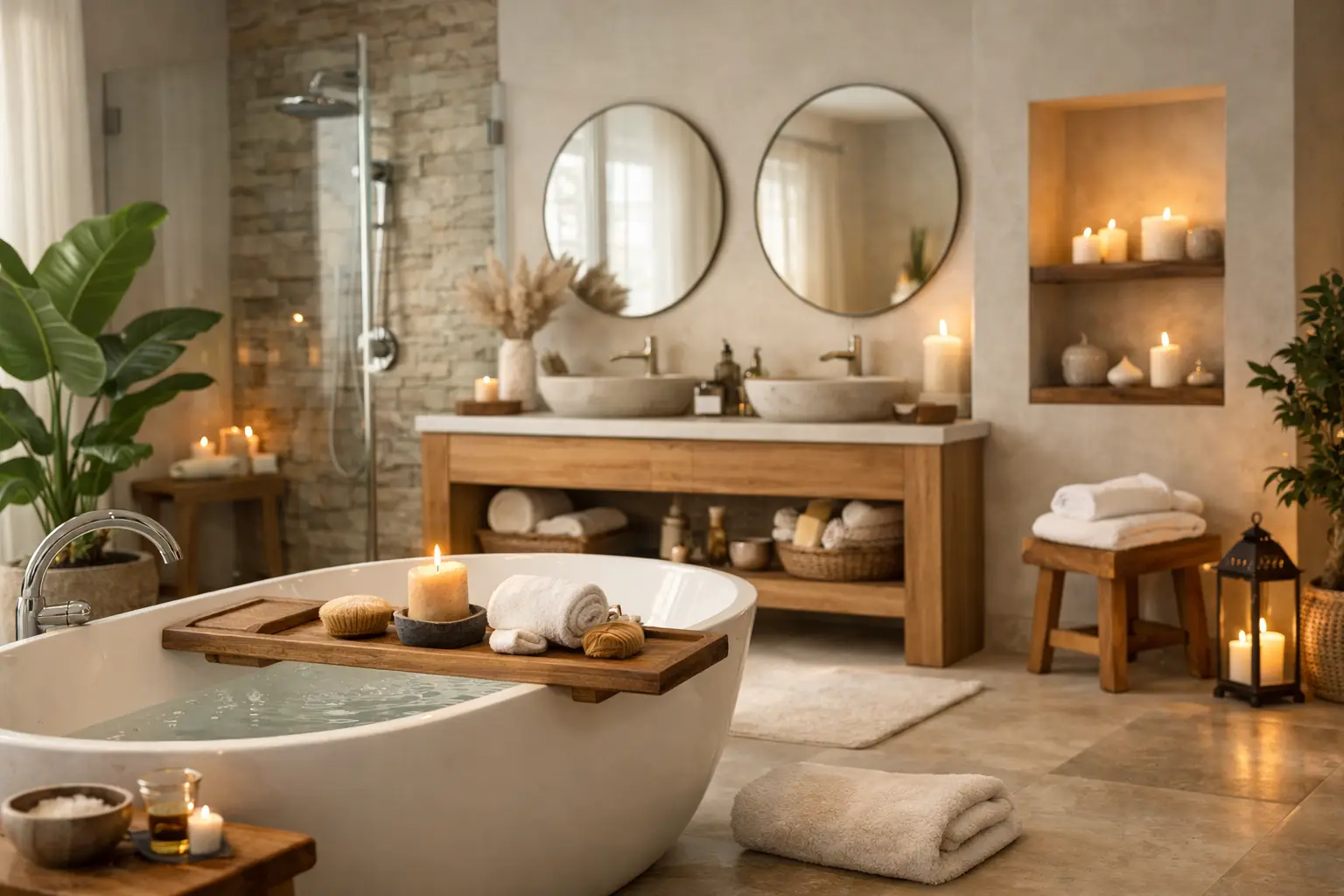
A bathroom starts to feel luxurious long before the tile goes in. It happens when the room feels quiet, easy to use, and free of visual clutter. The best spa feel bathroom ideas are less about copying a resort and more about making daily routines feel calmer, cleaner, and more intentional.
For San Diego homeowners, that usually means balancing beauty with real-life performance. A bathroom can look polished in photos and still fall short if the lighting is harsh, the storage is awkward, or the materials show every water spot. A true spa-inspired space needs to hold up to morning traffic, humidity, and the way you actually live.
What makes spa feel bathroom ideas work
A spa bathroom is really a study in restraint. The room should feel open, but not empty. Warm, but not dark. Minimal, but not inconvenient. That balance matters because the features that create a calm atmosphere also need to support comfort, maintenance, and long-term durability.
The strongest designs usually start with a few core decisions: a quieter color palette, layered lighting, better storage, and materials with natural texture. From there, layout and fixture choices shape how the room functions. If your current bathroom feels busy or stressful, the issue is often not the square footage. It is the number of competing finishes, poor lighting placement, and a lack of concealed storage.
1. Start with a softer material palette
Color does a lot of heavy lifting in a bathroom. If you want a spa feel, bright white by itself can read more clinical than calming. A better approach is to work with warm whites, sandy neutrals, soft taupes, pale grays, and muted earth tones. These shades reflect light without making the room feel stark.
Texture matters just as much as color. Stone-look porcelain, lightly grained wood vanities, handmade tile, and brushed metal finishes create depth without adding noise. If every surface is glossy, the room can feel cold. If every surface is heavily patterned, it starts to feel restless. The goal is contrast you can feel, not contrast that demands attention.
2. Use lighting that flatters the room
Lighting is one of the most overlooked spa feel bathroom ideas, and it is often the difference between a bathroom that feels expensive and one that feels unfinished. Overhead lighting alone rarely gets the job done. It can cast harsh shadows and make the room feel flat.
A better plan layers the light. Recessed ceiling fixtures can provide general brightness. Sconces at the mirror help with grooming and create a softer effect on the face. Accent lighting under a floating vanity or in a shower niche adds depth and gives the room a more tailored look.
Dimmer switches are worth it. They let you shift from bright morning light to a softer evening setting, which changes the mood of the room without any major design move.
3. Make the shower the focal point
In many primary bathrooms, the shower has more impact than the tub. If space or budget requires a choice, upgrading the shower often gives you the strongest return in both function and everyday enjoyment.
A large walk-in shower with minimal framing feels open and clean. Continuous tile, a recessed niche, and a frameless glass enclosure help the room feel less interrupted. Rain heads are popular, but they should not be the only fixture. A handheld shower adds flexibility for cleaning, rinsing, and practical day-to-day use.
Steam features can take the experience further, but they are not for every project. They require proper enclosure details, ventilation, and planning. If the goal is a spa-like result without a full steam build, generous shower space, quality tile work, and thoughtful fixture placement can still create a strong effect.
4. Keep storage out of sight but close at hand
Nothing breaks a calm bathroom faster than countertops crowded with bottles, cords, and backup supplies. Good storage is not just a convenience. It is a design feature.
Drawers inside the vanity are usually more useful than deep cabinets because they make everyday items easier to reach. Medicine cabinets can be integrated cleanly, especially when recessed. Tall linen storage works well if the room has enough wall space, but in tighter layouts, built-in niches and carefully planned vanity storage may do more.
This is where remodeling decisions get practical. Minimalism looks great, but only if the room actually has places to hide what you use.
5. Choose a vanity that feels furniture-grade
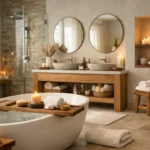
The vanity often anchors the whole room, so it should feel intentional. A furniture-style vanity in oak, walnut, or a painted warm neutral can soften the harder tile and stone surfaces around it. That contrast is part of what makes the room feel elevated.
Floating vanities are especially effective in contemporary bathrooms because they create more visible floor area and make the room feel lighter. That said, they are not always the best answer for every homeowner. If you need maximum storage, a full-height vanity may be the smarter choice. The right option depends on whether visual openness or storage capacity matters more in your daily routine.
6. Bring in natural elements without overdoing it
Spa design often leans on nature, but it works best when it feels edited. Wood tones, stone textures, woven accents, and a small touch of greenery can warm up the room without turning it into a theme.
This matters in coastal homes especially, where the best interiors feel relaxed and refined rather than overly decorative. A few natural materials can connect the bathroom to the rest of the home and support that indoor-outdoor sensibility San Diego homeowners often want.
If maintenance is a concern, porcelain that mimics natural stone or wood can be a smart substitute. You still get the look and warmth, but with easier upkeep and better moisture resistance.
7. Let tile create calm, not clutter
Tile is one of the biggest visual decisions in a bathroom remodel. Too many shapes, colors, or transitions can make the room feel smaller and busier. A spa-inspired bathroom usually benefits from fewer tile selections used more consistently.
Large-format tile can reduce grout lines and create a cleaner appearance. Vertical stack patterns can make walls feel taller. Textured tile in one focused location, such as a shower wall or niche, can add interest without overwhelming the room.
The trade-off is that highly minimal tile layouts demand strong installation quality. When the design is quiet, details show. Clean cuts, balanced spacing, and careful alignment matter more, not less.
8. Consider a tub only if it improves the room
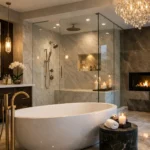
A freestanding tub is often associated with luxury, but it should earn its place. In a spacious bathroom, it can create a striking focal point and support the spa atmosphere homeowners want. In a tight layout, it can crowd circulation and make the room harder to use.
If you love baths and have space to do it right, a soaking tub can be a strong addition. If baths rarely happen in your household, that square footage may be better used on a larger shower, better storage, or simply more open floor area. Spa feel is not about adding every premium feature. It is about choosing the right ones.
9. Upgrade the details you touch every day
Luxury is often felt more than seen. Heated floors on a cool morning, a solid vanity drawer that closes smoothly, a shower control placed where you do not have to get wet to turn it on – those are the details that improve daily life.
The same goes for towel placement, hardware finish, and mirror scale. A bathroom can have expensive materials and still feel awkward if these decisions are treated as afterthoughts. The most successful spa feel bathroom ideas are the ones that respect daily habits.
10. Make room for quiet technology
Tech can support a spa atmosphere when it stays in the background. Heated floors, integrated lighting controls, defogging mirrors, and upgraded ventilation all improve comfort without calling attention to themselves.
Ventilation deserves special attention. A bathroom that traps humidity will never feel fresh for long, no matter how beautiful the finishes are. Proper exhaust, especially in larger showers or enclosed water closets, protects the materials and keeps the space more comfortable.
11. Design for maintenance from the start
A bathroom should feel calm after installation too. That means choosing finishes that are realistic for your household. Matte black fixtures look sharp, but some finishes show mineral buildup more quickly. Natural stone can be beautiful, but it may require more care than porcelain. Open shelving can look airy, but it collects dust and product clutter fast.
This is where a well-managed remodel matters. At Forge & Stone, the best bathroom projects usually come together when design and construction decisions happen side by side, with honest conversations about what looks good, what lasts, and what fits the home.
Spa feel bathroom ideas that fit your home
The most successful remodels are not built from trend lists. They are shaped around the home, the layout, and the people using the space every day. A spa-inspired bathroom in Rancho Santa Fe may lean more classic and architectural. A home in Pacific Beach may call for a lighter, more relaxed material palette. The common thread is clarity – fewer distractions, better function, and finishes that feel considered.
If you are planning a bathroom remodel, it helps to think beyond the visual mood board. Ask how you want the room to feel at 6:30 in the morning, after a long day, and five years from now. The right design choices create that sense of ease from the beginning, and that is what makes a bathroom feel truly restorative.