The best open concept kitchen remodel ideas usually look simple when they’re finished. What homeowners don’t always see is how much planning it takes to make an open layout feel calm, useful, and worth the investment. Removing walls is the easy part. Creating a kitchen that improves circulation, supports daily routines, and still feels refined takes a more thoughtful approach.
In San Diego homes, that matters even more. Open kitchens often connect to living areas, dining spaces, and backyard access points, which means every design decision carries more visual weight. The room has to work hard without looking busy.
What makes an open concept kitchen work
A good open kitchen is not just a bigger room. It is a room with clear purpose. You want better sightlines, more natural light, and easier movement, but you also need enough structure so the space does not feel exposed or undefined.
That balance usually comes down to zoning. The kitchen still needs boundaries, even when walls are gone. Those boundaries can come from an island, a change in ceiling detail, a shift in flooring pattern, or simply the placement of cabinetry and lighting. The goal is to keep the room open while making each area feel intentional.
This is why the best remodels start with how you live. A family that cooks every night needs a different layout than homeowners who entertain often or want a strong indoor-outdoor connection. Open concept kitchen remodel ideas should support the habits of the people using the space, not just follow a trend.
Open concept kitchen remodel ideas that add function and polish
1. Use a large island as the anchor
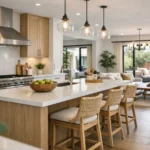
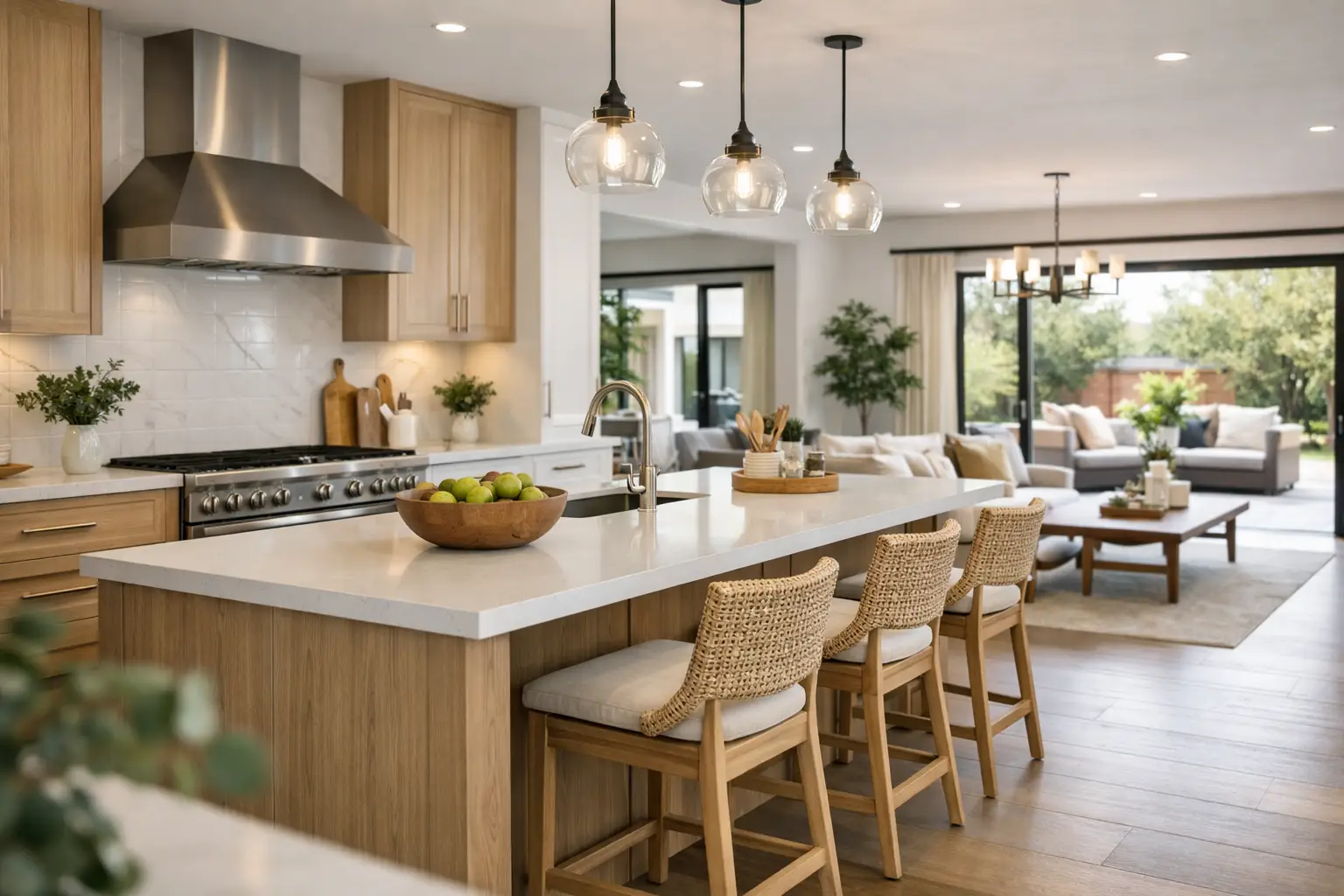
In most open layouts, the island becomes the room’s center of gravity. It can define the kitchen without closing it off, while also adding prep space, seating, and storage.
The key is proportion. An island that is too small feels like an afterthought. One that is too large can interrupt circulation and crowd adjacent rooms. In higher-end remodels, we often see the best results when the island is sized for both workflow and visual presence, with enough clearance around it to keep traffic moving comfortably.
2. Hide the working side of the kitchen
Open kitchens put everything on display, which is not always ideal. One smart approach is to create a cleaner public-facing side and tuck the messier functions into less visible zones.
That might mean placing the sink on the island while moving small appliances into a dedicated wall of cabinetry, or adding a prep pantry where clutter can stay out of sight. If you love the look of open space but not the reality of seeing every blender, toaster, and grocery bag, this idea makes a real difference.
3. Add a pantry that actually reduces clutter
In many remodels, pantry space has more impact than an extra decorative feature. Open layouts have less visual forgiveness, so storage needs to work harder.
A walk-in pantry, a concealed appliance garage, or full-height pantry cabinets can keep countertops quiet and organized. This is especially useful in family homes where the kitchen handles everything from lunch prep to mail sorting to after-school snacks. Clean lines only stay clean when there is somewhere practical to put things.
4. Create a material palette that connects adjoining rooms
Because an open kitchen is visible from multiple areas, it should feel connected to the surrounding home. That does not mean everything has to match. It means finishes should relate to each other.
White oak cabinetry, warm stone, soft plaster tones, and muted metal finishes often work well because they bring depth without making the room feel heavy. In coastal Southern California homes, lighter palettes can help reflect natural light, but contrast still matters. A darker island base, textured tile, or statement hood can give the kitchen enough definition to hold its own within the larger space.
Designing for traffic flow, not just appearance
Some of the most expensive kitchen mistakes come from focusing on finishes before layout. In an open plan, movement patterns matter just as much as cabinetry style.
Think about how people enter the room, pass through it, and gather in it. If the main path from the backyard to the living room cuts directly through the cooking zone, the kitchen may feel frustrating even if it looks beautiful. If bar stools back into a walkway, seating can become more awkward than useful.
5. Separate entertaining space from cooking space
One of the strongest open concept kitchen remodel ideas is to keep guests near the kitchen without placing them in the middle of it. A well-placed island overhang, a beverage station, or a secondary prep area can create that separation.
This matters if you host often. People naturally gather around food, but no one wants to dodge traffic while carrying a hot pan from the range to the sink. Good design lets the kitchen feel social while still protecting the functional core of the room.
6. Use lighting to define zones
When walls come out, lighting takes on more responsibility. It needs to support tasks, create mood, and help visually organize the room.
Pendant lighting over an island can mark the kitchen zone, while recessed lighting handles overall brightness and under-cabinet lighting supports prep work. In adjoining dining or living spaces, decorative fixtures help create a subtle shift in atmosphere. Done well, lighting gives an open room structure without adding physical barriers.
The structural and practical side homeowners should not overlook
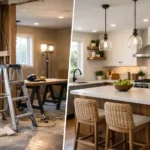
Open layouts can be transformative, but they are not always straightforward. Removing a wall may require structural engineering, new beams, rerouted plumbing, electrical updates, HVAC adjustments, and permits. That is one reason realistic planning matters early.
There is also the question of what you give up. More openness can mean less upper cabinet storage, fewer walls for art or furniture placement, and more noise carrying through the home. For some households, that trade-off is worth it. For others, a partially open layout may be the better answer.
7. Consider a partial opening instead of full removal
Not every wall needs to disappear. Sometimes a larger cased opening, a widened pass-through, or a half wall with built-in storage gives you the benefits of openness without losing all separation.
This approach can be especially effective in older homes where full structural changes are more involved, or in households that want some visual connection while keeping cooking mess and sound more contained. Open concept kitchen remodel ideas do not have to mean one giant room. They can also mean a smarter relationship between rooms.
8. Plan for appliances early
Appliance decisions affect layout more than many homeowners expect. Refrigerator size, range width, ventilation needs, panel-ready options, and microwave placement all influence how open and cohesive the kitchen feels.
A statement range can become a focal point, but only if the hood and surrounding cabinetry are designed accordingly. A bulky refrigerator in the wrong location can interrupt sightlines. Early planning helps the finished kitchen feel integrated instead of pieced together.
9. Extend the kitchen toward outdoor living
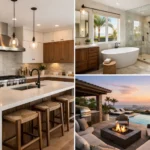
In San Diego, one of the biggest advantages of an open remodel is the chance to connect interior space with the backyard. Larger sliding or folding doors, aligned flooring transitions, and sightlines to an outdoor dining area can make the home feel significantly more expansive.
This only works well when the kitchen layout supports it. If exterior doors compete with the island or cut through work zones, the connection can feel forced. But when the circulation is right, the kitchen becomes a natural bridge between indoor living and outdoor entertaining.
10. Build in details that keep the room quiet
Open kitchens succeed when they feel composed. That often comes from smaller details rather than dramatic gestures.
Integrated panels on appliances, flush cabinet lines, fewer upper cabinets, slab or full-height backsplash treatments, and thoughtful hardware choices all help reduce visual noise. These moves are especially valuable in luxury remodels, where the expectation is not just beauty but restraint.
How to choose the right idea for your home
The right concept depends on your home’s structure, your budget, and how you use the space every day. If your biggest frustration is clutter, storage should lead the design. If you entertain often, circulation and social zones deserve more attention. If your home already has beautiful natural light, the remodel should protect and amplify it.
This is where a clear process matters. Good remodeling is not about saying yes to every idea. It is about knowing which ideas improve your home and which ones add cost without adding value. At Forge & Stone, that means looking at layout, materials, permitting, and construction as one coordinated plan, so the final result feels as good to live in as it looks in photos.
A well-designed open kitchen should make daily life easier the moment you step into it. If your current layout feels closed off, crowded, or disconnected from the rest of the home, the best next step is not chasing trends. It is identifying what would make the space work better for the way you actually live.