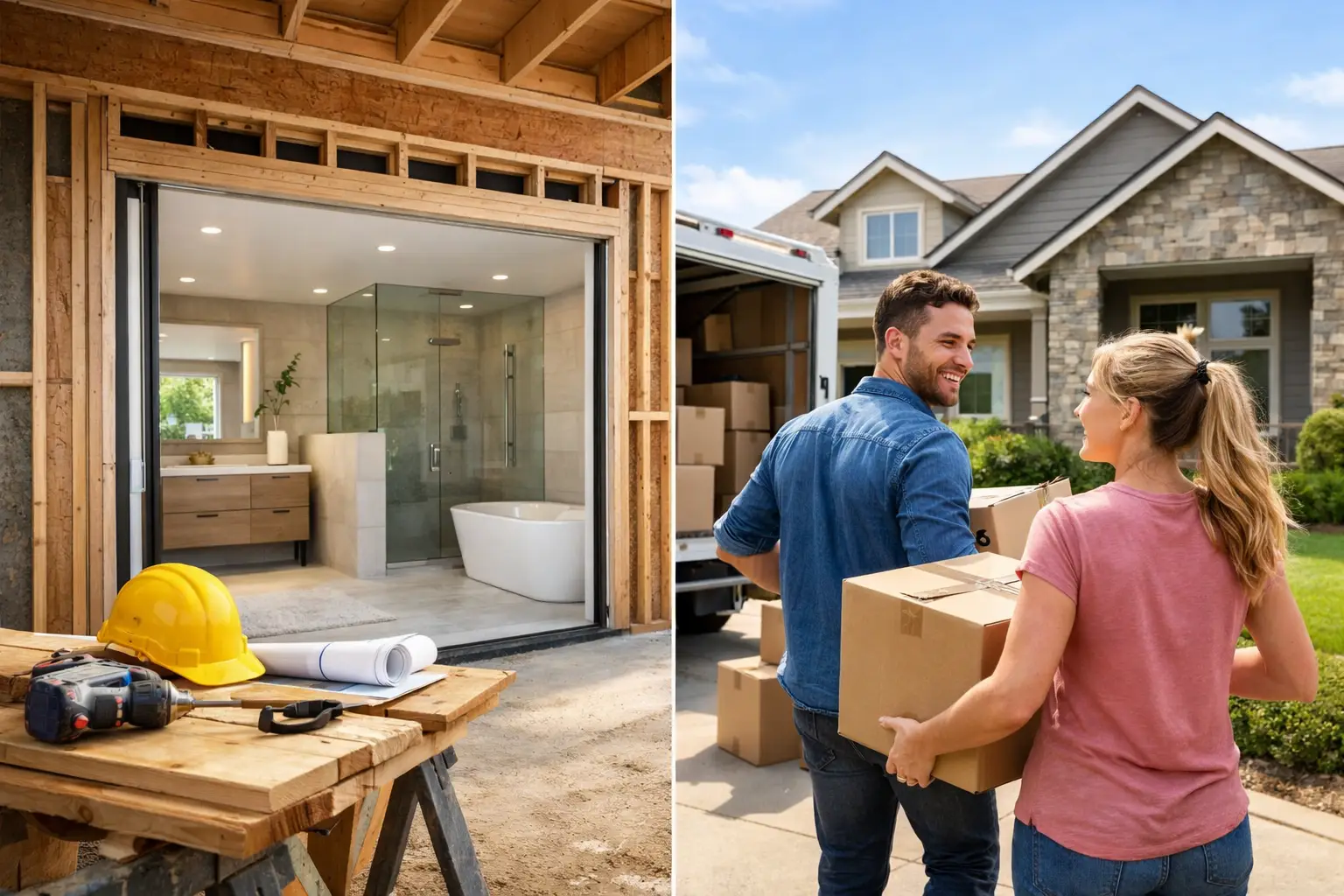
You may love your neighborhood, your lot, and the way the afternoon light hits your living room – but still feel like your home no longer fits. That is exactly where the room addition vs moving decision gets real. For many San Diego homeowners, it is not just a financial question. It is about lifestyle, timing, disruption, and whether your current home still has the potential to become what you want.
There is no universal right answer. Some homes are strong candidates for an addition. Others are better sold, especially when the layout, site constraints, or renovation costs start fighting against your goals. The smart move is to look beyond the surface math and evaluate how each option affects your daily life, your property value, and your stress level over the next several years.
Room addition vs moving: start with what is not working
Before comparing budgets, get specific about the problem. Are you short on bedrooms because your family has grown? Do you need a dedicated office that actually closes off from the rest of the house? Is your kitchen too small for how you entertain, or is the whole floor plan working against you?
A room addition makes the most sense when your home is fundamentally right but missing one or two important pieces. If you like the location, school district, yard, and overall character of the property, adding square footage can be a practical way to stay put while improving function.
Moving tends to make more sense when the issues go deeper. If the neighborhood no longer fits your lifestyle, your commute has changed, or the house would still feel compromised even after a major renovation, buying another home may be the cleaner solution.
The financial side is more nuanced than it looks
At first glance, moving can seem simpler. You sell your current home, buy a larger one, and skip construction. But the actual cost of moving is rarely just the price difference between homes.
You also have agent commissions, closing costs, moving expenses, possible repairs or staging before listing, higher property taxes if you buy at a much higher price point, and today’s financing reality if your current mortgage rate is far lower than what is available now. That rate gap alone can change the equation dramatically.
A room addition carries its own major costs, of course. You are paying for design, plans, engineering, permits, construction, and finish materials. Depending on the scope, you may also need structural upgrades, electrical work, plumbing, HVAC extensions, or foundation work. In a high-value market like San Diego, quality construction is not cheap.
Still, the better question is not simply, “Which option costs less?” It is, “Which option gives me the better outcome for the money?” If a well-designed addition solves the exact problem and strengthens your home’s value, it can be a better investment than overpaying for a new house that still needs updates.
When a room addition is the better choice
A room addition is often the right move when your lot and existing structure support it. If you have room to expand outward, or a floor plan that allows for a thoughtful second-story addition, you may be able to create meaningful space without giving up what already works.
This path is especially attractive for homeowners who are established in a neighborhood they do not want to leave. In coastal and upscale San Diego communities, location is a major asset. If you are already in the area you want, improving your current property can be far more strategic than competing for another home nearby.
Additions also allow for more precision. Instead of paying for a whole new house, you can build specifically for the way you live. That could mean a primary suite with better privacy, a family room that connects to the backyard, or a guest suite for multigenerational living. In that sense, you are not just adding square footage. You are correcting the mismatch between your home and your life.
The catch is that not every house is a good candidate. Zoning limits, setback requirements, lot coverage rules, HOA restrictions, and structural realities all matter. Good planning matters even more when you want the addition to feel original to the home rather than tacked on.
When moving is the better decision
Sometimes homeowners start with an addition in mind and then realize they are trying to force a solution onto the wrong property. If your current home needs extensive work well beyond the new space, costs can stack up quickly.
For example, if you need another bedroom, but the house also has an outdated kitchen, undersized bathrooms, low ceilings, poor natural light, and a chopped-up layout, a single addition may not solve enough. You can absolutely remodel around those issues, but at a certain point the scale becomes closer to a full transformation than a simple expansion.
Moving may also be the better choice if your lot cannot accommodate the addition you want, or if construction would require too many compromises. Losing all of your yard, creating awkward circulation, or overbuilding for the neighborhood can hurt both enjoyment and resale.
Then there is timing. Some homeowners need a faster answer because of work, school, or family changes. While buying a home is never stress-free, a major addition takes time. Design, permitting, and construction can stretch across months. If you need the extra space immediately, moving may be more practical.
How San Diego changes the equation
In San Diego, the room addition vs moving question is shaped by local realities. Inventory in desirable neighborhoods can be tight. Replacement homes that offer more space in the same area are often expensive, and many still need renovation after purchase.
At the same time, the region’s climate and lifestyle create strong upside for thoughtful additions. Indoor-outdoor living matters here. A new family room that opens to the backyard, a primary suite with better light and privacy, or an expanded kitchen with easy patio access can change the experience of the entire home.
That said, permitting and site conditions require experience. Coastal zones, hillside lots, older homes, and neighborhood-specific rules can all affect feasibility and cost. This is where a clear process matters. Homeowners need realistic guidance early, not wishful pricing that falls apart later.
Think about disruption, not just dollars
Construction has a real impact on daily life. Even well-managed projects involve noise, workers on site, material deliveries, inspections, and decisions along the way. If the addition connects to major living areas, there may be periods where your home feels less comfortable or less private than usual.
Moving has its own disruption. You are packing, selling, buying, changing routines, and possibly leaving a neighborhood you know well. For families, that can mean school changes, social disruption, and a longer adjustment than expected.
Neither option is truly easy. The difference is in the type of stress. With an addition, the stress is temporary and tied to construction management. With moving, the stress often comes from market pressure and uncertainty about whether the next house will really be better.
A practical way to decide
If you are weighing these options seriously, start with three questions. First, if your current home had the extra space you need, would you actually want to stay? Second, can the property support the kind of addition that would solve the problem well? Third, does the budget still make sense when you compare total moving costs, not just purchase price?
If the answer to the first two is yes, it is worth exploring an addition in detail. If the answer to the first is no, moving is probably the more honest path.
It also helps to define what success looks like. Some homeowners want the lowest overall cost. Others want the best long-term value, the least disruption to their kids, or the opportunity to create a more refined, personalized home. Those are different priorities, and they can lead to different decisions.
A well-run remodeling firm can help clarify feasibility early. At Forge & Stone, that usually means looking at the property, understanding how the home functions today, and being direct about what is possible, what it will take, and where the trade-offs are.
The best decision usually comes from a simple truth: stay and build when your home still deserves the investment, and move when you are really chasing a different life, not just another room. If you can separate those two motivations, the next step gets much clearer.